You are three companies deep into a job search. Each role has a tab group: careers page, recent funding news, a LinkedIn post from the hiring manager, a screenshot of the salary range, a draft outreach email in Notes, and a ChatGPT summary of the company's product.
Monday you are energized. Thursday you cannot remember which tab group was which company. Friday you miss a follow-up because the draft email was in the wrong app.
Job search is not a filing problem. It is a high-volume research problem with emotional stakes attached.
Opportunity cost hurts more when the note you need is buried under a tab you closed last week.
What to capture
Save everything into one inbox:
- Company careers pages and job descriptions
- Screenshots of salary bands, benefits pages, team pages
- LinkedIn profiles and posts worth referencing
- Outreach drafts and follow-up templates
- Interview prep notes and questions you want to ask
Do not organize by company on day one. Save first. Search and collections emerge from what you actually capture.
Search by what you remember
Queries that work in practice:
Series B fintech remotehiring manager post about culturesalary range senior engineerfollow up email template
You remember the scene — the green logo, the remote policy bullet, the phrase in the job description. Screenie matches that.
Build collections as you go
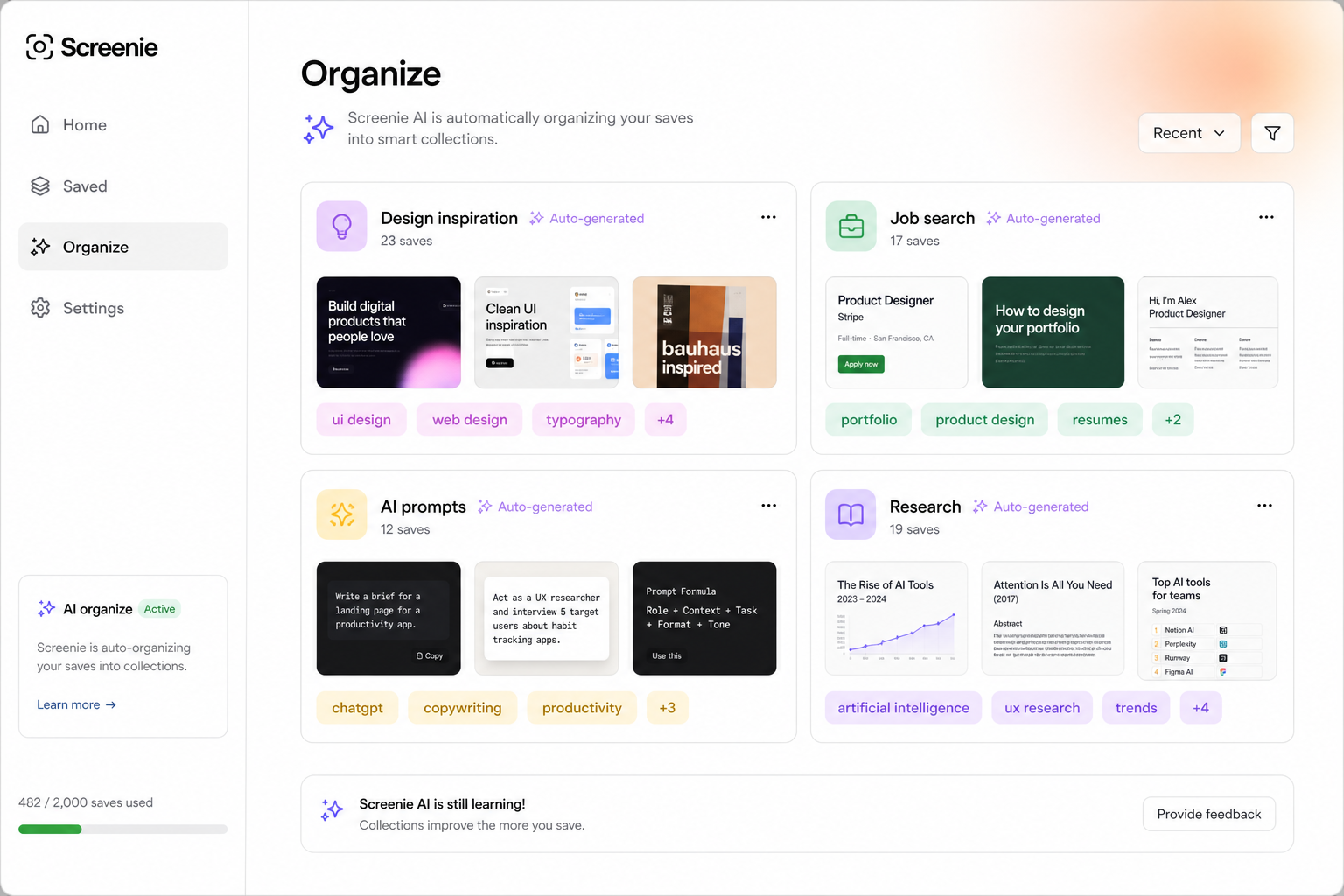
After a week of saving, patterns appear. Screenie can group related saves into collections that build themselves — companies you applied to, roles you are interviewing for, templates you reuse.
You did not build the taxonomy upfront. It grew from capture.
Reduce friction on the way in
Migrate old bookmarks with Import bookmarks. Save new pages with a one-tap workflow. Draft emails with AI and save the good answers to the same inbox.
The job search is stressful enough without a separate system for every type of fragment.
The point
You are not disorganized. You are running a research project without a research inbox.
Join the waitlist and keep your next company page where you can find it — when the interview is tomorrow, not when the tab is already closed.